Spec Battle: Dji Osmo Mobile 8 vs Sony Xperia 1 Vii — Is It Worth Upgrading?
Category: Mobile Phones
Introduction
The decision to upgrade camera gear or a flagship phone often comes down to a trade-off between hardware improvements and real-world value. This comparison pits the Dji Osmo Mobile 8, a dedicated smartphone gimbal designed to elevate handheld video, against the Sony Xperia 1 Vii, a flagship smartphone aimed at creators who demand pro-level imaging and media capabilities. Rather than a popularity contest, this article asks a practical question: for the typical buyer interested in mobile video and stills, which investment makes more sense — or is it best to keep both?
At a Glance: What Each Product Is For
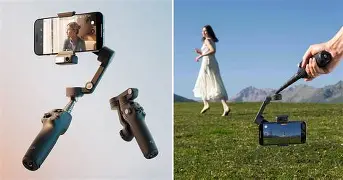
Dji Osmo Mobile 8 is a stabilization accessory. Its primary goal is to remove shake, enable cinematic motion, and provide ergonomic controls and shooting modes (timelapse, hyperlapse, active tracking) that are difficult to replicate with handholding alone. Buyers looking to improve video quality without changing phones typically consider a gimbal.
Sony Xperia 1 Vii is a flagship smartphone that bundles a high-end camera system, a premium display, and on-device processing to deliver excellent stills and video. It targets users who want a complete, standalone device for content creation — photographers and videographers who value sensor performance, lens versatility, manual controls, and a color-accurate, high-resolution display.
Detailed Analysis
Design and Ergonomics
The Dji Osmo Mobile 8 is purpose-built for handheld video. Its form factor centers on a comfortable grip, a rotating gimbal head, and physical controls for start/stop, tilt, and mode switching. The weight distribution is tuned to reduce arm fatigue during extended shoots. For creators who shoot while walking, vlogging, or performing panning cinematic moves, the gimbal’s physical ergonomics and stabilizing algorithms make long takes easier and more polished.
The Sony Xperia 1 Vii follows Sony’s long-running design language: tall, narrow body with a large, premium display and a camera module that emphasizes photo/video capabilities. The phone is intended to be used one-handed for quick captures, yet it also supports tripod mounts and external accessories. Buyers who prioritize pocketability and a single-device workflow will appreciate the Xperia’s compactness relative to carrying a separate stabilizer.
Stabilization: Gimbal vs In-Phone OIS/EIS
Stabilization is where the two products directly complement and compete. The Osmo Mobile 8 provides three-axis mechanical stabilization, which physically isolates the phone from operator movement. This delivers smooth pans, stabilized walk-and-talk shots, and consistent framing during deliberate camera moves. Mechanical gimbals handle low-frequency motion and sudden shifts more naturally than software-only approaches.
Modern flagships like the Xperia 1 Vii combine optical image stabilization (OIS), electronic stabilization (EIS), and software motion smoothing. These systems have improved substantially and are convenient for spontaneous shooting and run-and-gun situations. However, for extended cinematic moves, stabilized timelapses, or highly controlled motion (e.g., slider-like glides), a dedicated gimbal still produces superior, buttery results with less post-processing.
Image and Video Quality
The Sony Xperia 1 Vii positions itself as a creator-first phone: expect multiple focal lengths (wide, ultrawide, tele), robust manual controls, and a video pipeline tuned for color grading. On-device codecs, bitrate options, and pro modes (log profiles, manual exposure, focus peaking) are important for users who plan to edit footage. The phone’s sensor sizes, lens quality, and computational pipeline determine low-light performance, dynamic range, and color rendering.
The Dji Osmo Mobile 8 impacts image quality indirectly: by stabilizing footage, it allows shooters to use slower shutter speeds without blur and to capture smoother motion that looks more professional. For phones with limited stabilization budgets or when shooting at higher frame rates, a gimbal can unlock higher-quality capture scenarios that would otherwise suffer from shake or jitter.
Software, App Ecosystem, and Workflow
Dji’s ecosystem centers on the Mimo or DJI Mobile app (or compatible third-party apps), providing modes such as ActiveTrack, Story templates, timelapse tools, and a simple interface for gimbal calibration and firmware updates. The Osmo Mobile 8’s value grows with these features: automated tracking simplifies single-operator shoots, and built-in presets help create polished social content quickly.
Find top-rated Mobile Phones products at great prices.
See Deals →Sony’s Xperia offers native camera apps with pro controls and often bundles Sony’s Cinema Pro or Photo Pro apps that expose professional settings and RAW capture. The advantage here is an integrated workflow: capture, preview on a high-fidelity display, and export without moving between devices. For users who rely on advanced codecs or require fine control before export, the Xperia’s software sophistication is a major plus.
Battery Life and Practical Runtime
Gimbals have their own battery constraints. The Dji Osmo Mobile 8 typically offers several hours of runtime per charge depending on payload weight (phone size) and usage patterns (motors under strain reduce battery life). Carrying a spare battery or power bank is common practice for video shoots that last all day.
The Sony Xperia 1 Vii, as a flagship phone, balances display brightness, processing power, and camera use. Heavy video recording, especially in high-resolution or high-frame-rate modes, will shorten battery life compared to light use. For creators who film long sessions, the phone’s battery management and fast-charging capability matter. The combined approach — using the phone on a gimbal while plugged into a power source — is a practical workflow for longer shoots.
Portability and Travel Use
Portability is a key real-world consideration. The Osmo Mobile 8 adds bulk and a carrying case to a phone-only kit but is still far more travel-friendly than a camera and stabilizer rig. For travel vloggers who prioritize steady motion across varied terrain, the gimbal is a reasonable trade-off.
The Xperia 1 Vii wins for minimalism: it fits in a pocket and can be used instantly, which matters for candid shots, street photography, and situations where quick reaction time beats technical perfection. Travelers who want to minimize gear often prefer a single device that is always on-hand.
Pros & Cons
Dji Osmo Mobile 8
- Pros: Superior mechanical stabilization for cinematic motion; ergonomic controls for prolonged handheld shooting; useful automated modes (tracking, timelapse); improves footage from most smartphones.
- Cons: Extra bulk and weight to carry; limited battery life relative to phone; adds complexity to quick, spontaneous captures; some features depend on app compatibility with a given phone model.
Sony Xperia 1 Vii
- Pros: Flagship-grade camera system with multiple focal lengths and pro controls; high-fidelity display for preview and color work; integrated software workflows and advanced codecs; always-with-you convenience.
- Cons: Inherent limits to handheld stabilization compared to a gimbal for long cinematic moves; heavy use of camera features reduces battery life; replacing/upgrading phone is a bigger expense than adding a gimbal to an existing device.
Side-by-Side Comparison
| Category | Dji Osmo Mobile 8 | Sony Xperia 1 Vii |
|---|---|---|
| Primary Purpose | Mechanical stabilization accessory for smartphones | Standalone flagship smartphone with pro imaging |
| Stabilization | Three-axis mechanical gimbal — best for smooth motion | OIS + EIS + computational stabilization — great for run-and-gun |
| Image Quality | Depends on phone; enables cleaner motion and slower shutter without blur | High-quality sensors, multiple lenses, pro modes for photo/video |
| Portability | Adds bulk; still travel-friendly compared to camera rigs | Pocketable; always available |
| Battery | Separate battery, several hours typical; needs management | Phone battery — variable with recording settings |
| Workflow | Requires pairing with app; good for single-person shoots | Integrated capture, editing, and export on-device |
| Best For | Vloggers, mobile filmmakers, creators who value motion quality | Photographers/videographers wanting an all-in-one device |
Real-World Use Cases and Buyer Considerations
Buyers often weigh a few predictable scenarios:
- Daily vlogging and social clips: Creators who publish frequent short-form videos benefit immediately from a gimbal’s stabilization and tracking. The Dji Osmo Mobile 8 simplifies consistent framing and reduces post-stabilization work.
- Professional mobile films and interviews: For productions involving planned camera moves, the gimbal enables cinematic shots and precise motion control. Paired with an Xperia 1 Vii, the combination covers stabilization and high-quality capture.
- Travel and casual photography: Travelers who prioritize minimal carry will favor the Xperia 1 Vii alone. The convenience of capturing a decisive moment without unfolding a rig is often the deciding factor.
- Live streaming and solo shoots: The Osmo Mobile 8’s controls and tracking modes help a solo operator manage framing and movement while performing or presenting.
- Low-light or cinematic grading workflows: The Xperia’s sensor performance and support for log profiles matter for users who plan to color-grade footage. In those cases, pairing the phone with a gimbal is the best route for quality and stability.
Buying Guide: How to Decide
Choosing between upgrading a phone to something like the Sony Xperia 1 Vii and buying a gimbal like the Dji Osmo Mobile 8 depends on several personal factors. The following checklist helps clarify priorities.
Budget and Upgrade Frequency
Upgrading a flagship phone is a major expense and often involves carrier deals or trade-ins. A gimbal is a smaller, more affordable purchase that can dramatically improve video output for existing phones. If budget is limited, the Osmo Mobile 8 represents an excellent value for creators who already own a capable phone.
Primary Content Type
If most content is cinematic or motion-heavy — walks, travel sequences, pans, gimbal-like moves — a dedicated gimbal pays off immediately. If the bulk of work is photography, quick social captures, or reliance on computational photography, a phone upgrade is more impactful.
Workflow Preferences
Those who want an all-in-one tool with minimal attachments and a professional-grade sensor pipeline should consider upgrading to a flagship like the Xperia 1 Vii. If a two-device workflow (phone + accessory) is acceptable, the combined benefits of a top-tier phone and a gimbal produce the most professional results.
Shop the latest Mobile Phones picks on Amazon.
See Deals →Compatibility and Future-Proofing
Check app compatibility, mount sizes, and firmware support. Dji often updates gimbal firmware for new phone models and camera APIs; buyers should confirm that the Osmo Mobile 8 supports the specific phone and shooting modes they plan to use. Similarly, if considering a phone upgrade primarily for camera features, verify the availability of required codecs, RAW support, and accessory ecosystems.
Battery and Power Management
Creators who film all day should plan for power: carry spare batteries for gimbals and a power bank for the phone, or choose gear with fast charging and pass-through power options. Some workflows require the gimbal to power the phone or vice versa; check for USB-C power delivery and mounting solutions.
Resale and Longevity
Flagship phones depreciate quickly, but they also extend functionality beyond imaging (connectivity, apps, AI features). Gimbals tend to retain usefulness longer across phone upgrades as long as mounting standards remain steady.
Practical Recommendation
For creators who already own a recent flagship phone and want a clear improvement in video quality, the Dji Osmo Mobile 8 is the most cost-effective upgrade. It improves motion aesthetics, enables cinematic moves, and complements the phone’s camera without requiring a full device replacement.
For those whose phone is several generations old, especially with weaker cameras or displays, upgrading to a Sony Xperia 1 Vii makes sense. It brings sensor improvements, pro capture modes, and editing workflows that cannot be added to an older phone by simply purchasing accessories. The Xperia becomes the foundation for better stills and higher-fidelity footage.
Professionals and serious hobbyists who can afford both will find the best outcome in pairing a flagship phone like the Xperia 1 Vii with a gimbal such as the Osmo Mobile 8. This combination addresses stabilization, dynamic range, manual control, and ergonomics — essentially replicating many features of a more complex video rig in a compact and mobile package.
Conclusion
The question "Is it worth upgrading?" has no single answer. The Dji Osmo Mobile 8 and Sony Xperia 1 Vii solve different parts of the same creative problem. The gimbal upgrades motion quality at a fraction of the cost of a phone, while the Xperia delivers the integrated sensor, display, and software improvements that make higher-end mobile filmmaking and photography possible.
Buyers should prioritize the weakest link in their current setup: if shaky footage is the main complaint, start with a gimbal; if the phone’s image quality, lens choices, or capture codecs limit creativity, a flagship phone upgrade is the better move. For those building a mobile-first production kit, combining both yields the most flexibility and the highest quality results without stepping up to larger camera systems.