Don't Buy Until You Read This: Epomaker He75 Mag vs Asus Tuf Gaming K3 Gen Ii
Choosing a gaming keyboard is no longer as simple as picking the one with the loudest switches or the brightest RGB. Buyers now care about latency, switch technology, build quality, software reliability, typing comfort, long-term durability, and whether a keyboard actually fits the way they work and play every day. In that context, the Epomaker He75 Mag and the Asus TUF Gaming K3 Gen II represent two very different approaches to the same goal: delivering a satisfying, capable keyboard for gamers and general users who want more than a cheap membrane board.
This comparison matters because these two products appeal to overlapping shoppers, even if they come from different design philosophies. The Epomaker He75 Mag leans into enthusiast-style features, magnetic switch appeal, and compact layout efficiency. The Asus TUF Gaming K3 Gen II, by contrast, speaks to buyers who value brand familiarity, durable construction, gaming-focused practicality, and a more mainstream ownership experience. For someone trying to decide between them, the better choice depends less on marketing terms and more on how the keyboard will be used at a desk day after day.
This article breaks down where each model stands in real-world use, what each one does well, where each falls short, and which type of buyer should actually consider one over the other.
Why This Comparison Is Worth Taking Seriously
Keyboard shoppers usually start with simple questions: Is it fast? Is it comfortable? Is it durable? But after a little research, the questions become more specific. Does a compact 75% layout make sense for work and gaming? Are magnetic switches genuinely useful or mostly hype? Is the software dependable? Are replacement parts or customization options easy to find? Is the board good for long typing sessions, competitive shooters, strategy games, and everyday office tasks?
That is where these two boards diverge.
The Epomaker He75 Mag is aimed at users attracted to newer switch technology and enthusiast features. It appeals to buyers who want a more modern-feeling board with a compact footprint and potentially more control over key behavior, especially if magnetic switch tuning is part of the package they are shopping for.
The Asus TUF Gaming K3 Gen II is more conventional in concept, but that can be a strength. Many buyers do not want to spend time tweaking actuation points or learning enthusiast terminology. They want a keyboard from a widely recognized gaming brand that feels sturdy, works reliably, and supports a mix of gaming and daily use without fuss.
Epomaker He75 Mag Review and Analysis
The Epomaker He75 Mag is the kind of keyboard that immediately attracts enthusiasts and curious buyers because of its feature set and layout. The 75% form factor is one of the most practical compact layouts on the market. It saves desk space while still keeping dedicated arrow keys and a function row, which makes a real difference for productivity, shortcuts, and general convenience. For users moving from a full-size keyboard, 75% tends to feel far less disruptive than a 60% layout.
The biggest talking point is its magnetic switch platform. For buyers who play fast-paced competitive games, magnetic switches are attractive because they can enable more precise control over actuation behavior. In theory and often in practice, that means quicker response customization, lighter or shorter actuation preferences, and gaming-specific tuning that traditional fixed mechanical switches cannot match. This is especially relevant for players of tactical shooters, rhythm games, or movement-heavy titles where key sensitivity changes can affect comfort and control.
In real-world use, however, the value of magnetic switches depends heavily on the user. Competitive players who understand what they want may appreciate the flexibility. More casual buyers may find that the benefit is subtle compared with simply having a good conventional mechanical keyboard. If someone mostly plays RPGs, MOBAs, simulation games, or uses the keyboard for mixed work and entertainment, magnetic tuning may be interesting rather than essential.
Build and acoustics also matter here. Epomaker products often appeal to users who care not just about raw function but about typing feel and sound. Buyers in this segment frequently care whether the board feels hollow, whether stabilizers rattle, and whether the case and plate create a pleasant keypress profile. A keyboard can be technically fast and still feel unsatisfying if it sounds harsh or unstable. That is why the He75 Mag tends to attract people who care about the overall desk experience, not just gaming specs on paper.
For typing, the compact layout is generally excellent once the user adapts. Writers, students, and office users often appreciate having more mouse room while retaining essential navigation access. If the board is well-tuned out of the box, it can work as a daily driver for both work and gaming. That said, compact boards do require some adjustment, especially for users who rely heavily on dedicated navigation clusters or a numpad.
Potential concerns with a keyboard like this usually involve software maturity, long-term firmware polish, and consistency. Enthusiast-oriented boards sometimes offer impressive hardware but a less refined software ecosystem than large gaming brands. Buyers who want set-it-and-forget-it convenience may find this frustrating if they have to troubleshoot settings, update firmware, or navigate less polished configuration tools.
Discover deals on Laptops & Computers — updated daily.
Browse Now →Epomaker He75 Mag Pros
- Compact 75% layout balances desk space savings with practical everyday usability.
- Magnetic switch technology offers advanced actuation customization for buyers who want finer control.
- Enthusiast appeal with likely stronger focus on typing feel, sound, and customization than many mainstream gaming boards.
- Good fit for mixed use if the user wants one keyboard for gaming, work, and general desktop use.
- Cleaner desk setup thanks to its smaller footprint.
Epomaker He75 Mag Cons
- Advanced switch features may be wasted on buyers who do not intend to customize actuation behavior.
- Software experience may not feel as polished as that of larger gaming brands.
- Compact layout still involves compromise for users who prefer full-size spacing or a numpad.
- Feature-rich boards can have a steeper learning curve for non-enthusiasts.
Asus TUF Gaming K3 Gen II Review and Analysis
The Asus TUF Gaming K3 Gen II takes a more familiar route. It is designed for users who want a gaming keyboard that feels dependable, durable, and easy to understand. Asus has strong name recognition in gaming peripherals, and for many buyers that brand familiarity lowers the perceived risk. Someone shopping for a keyboard to pair with a gaming laptop or desktop often feels more comfortable with a board from a known brand that also offers a broader ecosystem.
The TUF line is typically associated with durability and practical value. That matters more than marketing sometimes suggests. A keyboard used daily for gaming, work, and general browsing sees constant wear. Keycaps get oily, switches get hammered, and the chassis gets moved, bumped, and cleaned. Buyers often care less about theoretical premium features and more about whether the keyboard still feels solid after a year of regular use.

For gaming, the K3 Gen II should appeal to the buyer who wants a straightforward, responsive keyboard without diving into enthusiast complexity. This type of user often plays a broad mix of genres rather than focusing narrowly on competitive optimization. They want reliable key response in shooters, MMOs, action games, and everyday use, but they are not necessarily trying to fine-tune every detail of key travel.
Where Asus usually has an advantage is in the broader ownership experience. Software integration, ecosystem support, warranty confidence, and documentation are often part of the appeal. Even when enthusiasts criticize gaming-brand software, mainstream users may still prefer it because it is easier to find support resources and tutorials. For buyers who do not want to experiment much, that can be more valuable than niche high-end features.
Typing comfort on the K3 Gen II will likely depend on switch selection, case tuning, and keycap quality. Mainstream gaming keyboards often prioritize responsiveness and durability over refined acoustics. That can make them feel slightly less “premium” to keyboard enthusiasts, especially if the sound profile is sharper or the stabilizers are less carefully tuned. But many users simply want a keyboard that is responsive, comfortable enough, and built to take abuse.
The likely weakness of the K3 Gen II in this head-to-head is that it may feel less exciting and less customizable than the Epomaker. Buyers who specifically want magnetic switch experimentation or a more enthusiast-style typing experience may see the Asus as safe but less innovative. Still, safe and predictable is not a bad thing when the goal is a keyboard that works well out of the box.
Asus TUF Gaming K3 Gen II Pros
- Strong mainstream appeal for buyers who want a recognizable gaming brand.
- Likely easier ownership experience with broader support and simpler setup expectations.
- Durability-focused design should appeal to heavy daily users.
- Good all-around gaming practicality without requiring deep customization.
- Suitable for users building around a broader Asus ecosystem.
Asus TUF Gaming K3 Gen II Cons
- Less enthusiast-focused than the Epomaker in terms of cutting-edge switch features.
- May offer a less refined typing sound and feel than buyers in the custom keyboard scene expect.
- Potentially more conventional feature set, which can seem less compelling for shoppers seeking innovation.
- Mainstream gaming software can still feel bloated to some users.
Head-to-Head Comparison
When these two keyboards are compared directly, the most important distinction is not which one is “better” in the abstract, but which one better matches the buyer’s priorities.
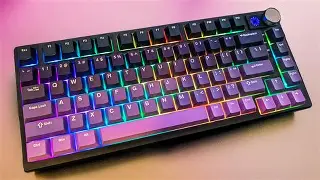
| Category | Epomaker He75 Mag | Asus TUF Gaming K3 Gen II |
|---|---|---|
| Design Philosophy | Enthusiast-leaning, feature-forward, compact | Mainstream gaming, practical, durability-focused |
| Layout Appeal | Excellent for users who want a 75% footprint | Better for buyers who prefer a more familiar gaming-brand approach |
| Switch Technology | Magnetic switch appeal and advanced actuation potential | More conventional and easier for general buyers to understand |
| Gaming Focus | Great for players who want finer control and tuning | Great for players who want reliable plug-and-play gaming performance |
| Typing Experience | Likely more interesting for enthusiasts who care about feel and acoustics | Likely more functional than characterful |
| Software/Ecosystem | Potentially less polished but more niche-feature-oriented | Potentially more familiar, better supported, easier for mainstream users |
| Best For | Enthusiasts, compact-layout fans, competitive users curious about magnetic switches | Mainstream gamers, brand-conscious buyers, users prioritizing durability and simplicity |
Which One Feels Better in Everyday Use?
Everyday use is where flashy feature lists get exposed. A keyboard can look impressive in product photos and still become annoying after a week if the layout feels awkward, the software is clumsy, or the typing feel becomes fatiguing.
For office work, writing, school tasks, and mixed desktop use, the Epomaker He75 Mag has a clear potential advantage if the user values a smaller keyboard and a more thoughtfully tuned typing experience. The 75% format is efficient without being extreme, and it works especially well on smaller desks or in laptop-centric setups where users want more room for a mouse, notebook, or audio gear.
The Asus TUF Gaming K3 Gen II may feel more comfortable to buyers who prefer a traditional gaming peripheral experience. That includes users who do not want to think too much about layout changes, switch behavior settings, or enthusiast maintenance. It is the safer choice for the buyer who wants something familiar, especially if the keyboard will be shared in a household or used in a straightforward gaming setup.
Noise is also a real-world issue. Buyers often underestimate how much keyboard acoustics matter until they are using the board on video calls, late at night, or in a shared room. Enthusiast-style boards often try to make the sound fuller and less harsh, while mainstream gaming boards may prioritize responsiveness and durability first. For remote workers and students, that can be a more important factor than RGB or even raw speed.
Gaming Performance: Who Actually Benefits More?
For competitive gamers, the Epomaker He75 Mag is the more intriguing option. Magnetic switch technology can be genuinely useful for players who care about precise input behavior. If someone already knows they prefer short actuation or wants to experiment with highly sensitive key response for movement-heavy games, the Epomaker will likely be more appealing.
For general gamers, the Asus TUF Gaming K3 Gen II may be the more sensible pick. Most players do not need advanced switch tuning to enjoy strong keyboard performance. They need consistency, decent feel, good rollover behavior, and enough comfort to handle long sessions. If that describes the buyer, the Asus may offer the better balance of ease and reliability.
Find top-rated Laptops & Computers products at great prices.
Shop Amazon →For single-player gamers and hybrid users, the decision often comes down to typing feel and layout preference more than gaming speed. Someone splitting time between gaming, work, chat, browsing, and content consumption may end up happier with whichever board feels better over several hours rather than whichever one has the more advanced technical feature list.
Buying Guide: Which Keyboard Should Buyers Choose?
Before choosing either model, buyers should think through a few practical questions.
Choose the Epomaker He75 Mag if:
- The buyer specifically wants to explore magnetic switch features and actuation customization.
- A 75% layout sounds ideal for saving desk space without losing core functionality.
- Typing feel, sound profile, and enthusiast-style appeal matter as much as gaming performance.
- The buyer is comfortable dealing with some software learning or enthusiast-style setup steps.
- The keyboard will be used in a compact desk or laptop-based setup where space efficiency matters.
Choose the Asus TUF Gaming K3 Gen II if:
- The buyer wants a straightforward gaming keyboard from a major brand.
- Durability, familiarity, and easier long-term ownership matter more than cutting-edge switch technology.
- The keyboard is for broad use across gaming, homework, office work, and general household use.
- The buyer prefers a more conventional setup process and broader software support expectations.
- The system already includes other Asus gaming products and ecosystem consistency matters.
Other Factors Buyers Should Not Ignore
Desk size: Compact keyboards make more sense than many people realize, especially when paired with low-sensitivity gaming mice that need room to move.
Work habits: Anyone doing spreadsheet-heavy work may miss a numpad. Anyone using lots of shortcuts may love a 75% layout once adjusted.
Tolerance for tweaking: Some buyers enjoy customization; others want simplicity. Being honest about this can prevent buyer’s remorse.
Sound preference: A keyboard used every day should sound acceptable to its owner and to anyone nearby.
Value over hype: A feature is only valuable if the buyer will actually use it. Advanced switch tuning is impressive, but not everyone benefits from it.
Final Verdict
The Epomaker He75 Mag is the more compelling choice for buyers who want a modern, enthusiast-leaning keyboard with magnetic switch appeal, a practical 75% layout, and a more distinctive overall experience. It makes the most sense for users who care about input customization, desk efficiency, and typing character rather than simply buying the safest mainstream option.
The Asus TUF Gaming K3 Gen II is the better fit for buyers who want a dependable gaming keyboard with broad appeal, simpler ownership, and the reassurance of a major gaming brand. It may not be as exciting on paper, but for many users it will be the easier keyboard to live with over time.
If the buyer is a competitive player or keyboard enthusiast who wants to experiment and values a compact premium-style experience, the Epomaker He75 Mag is likely the stronger pick. If the buyer wants reliability, familiarity, and a more traditional gaming purchase with fewer surprises, the Asus TUF Gaming K3 Gen II is the smarter buy.
In other words, the right decision is not about which keyboard has the flashier feature sheet. It is about whether the buyer wants customization and enthusiast appeal or practicality and mainstream dependability. That distinction will matter far more than any marketing slogan once the keyboard is on the desk and in daily use.