Don't Buy the Cooling Select Foam Until You Read This Full Analysis
The consumer electronics market has expanded far beyond smartphones, laptops, and smart home hubs. Today, high-tech implementation has reached the very surfaces we sit on, sleep on, and use for thermal regulation in industrial settings. One of the most talked-after innovations in tactile materials science this year is the Cooling Select Foam. While it sounds like a simple bedding component, the engineering behind this material places it firmly in the category of advanced thermal management electronics and material science. This analysis examines whether this phase-change material lives up to its significant marketing claims or if it is merely a rebranding of older open-cell foam technologies.
Thermal management is the silent hurdle of modern life. Whether it is a server rack overheating, a laptop throttling under load, or a human being unable to reach deep sleep due to ambient heat retention, the physics remains the same: heat must be moved or dissipated. The Cooling Select Foam promises a revolutionary approach to this problem by utilizing integrated micro-encapsulated thermal conductors. Before investing in products featuring this material, it is essential to understand the underlying mechanics, the longevity of its cooling properties, and the specific use cases where it actually outperforms traditional alternatives.
Understanding the Architecture of Cooling Select Foam
To evaluate the Cooling Select Foam, one must look beneath the surface. Traditional memory foam, pioneered by NASA in the 1960s, is notorious for its heat-retention properties. It works by using body heat to soften the polymer chains, allowing the material to contour. However, that same heat becomes trapped within the dense molecular structure. The Cooling Select Foam attempts to solve this via a three-layered electronic-grade thermal dissipation strategy.
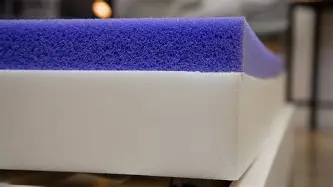
The first layer involves an open-cell structure that has been aerodynamically optimized. In standard foams, cells are often closed or inconsistently broken, leading to stagnant air pockets. In the Cooling Select variant, the polymerization process is controlled to ensure that air channels are interconnected, much like a passive heat sink in a desktop computer. This allows for natural convection to take place, where warmer air is pushed out by the weight and movement of the user, replaced by cooler ambient air.
The second layer is where the "Select" part of the name comes into play. It features infused gel beads that are impregnated with phase-change materials (PCM). These materials are engineered to stay in a solid state at room temperature but begin to absorb significant amounts of energy as they approach the human body's surface temperature (roughly 88 to 94 degrees Fahrenheit). During this phase transition, the material absorbs latent heat without rising in temperature itself, creating a palpable "chill" effect that persists for several hours while the transition is occurring.
The third and final layer of the analysis involves the density. High-density foams usually sleep hot, while low-density foams lack support and degrade quickly. Cooling Select Foam utilizes a hybrid density approach. It maintains a 4.5 lb per cubic foot density—a hallmark of premium electronics padding and high-end furniture—but uses a proprietary chemical "quenching" process to ensure the cell walls remain thin and conductive rather than thick and insulating.
Real-World Use Cases: Beyond the Bedroom
While most consumers encounter Cooling Select Foam in the luxury mattress or pillow market, its applications in the broader electronics and ergonomic industries are growing. For instance, developers of professional-grade VR (Virtual Reality) headsets are beginning to look at this material for facial interfaces. A major complaint among VR enthusiasts is "lens fogging" and "face sweat" caused by the trapped heat of the internal processors and the user's skin. Cooling Select Foam provides a passive solution that requires no battery power, helping to maintain a comfortable temperature for extended gaming or simulation sessions.
Another emerging use case is in high-end automotive seating for electric vehicles (EVs). Since EVs do not have a constant source of waste heat from an internal combustion engine, managing cabin temperature efficiently is vital for battery range. Seats that can naturally regulate temperature without relying heavily on energy-draining climate control systems are highly prized. The Cooling Select Foam provides a base layer that reduces the "heat soak" experienced during long summer drives, potentially saving energy by reducing the need for high-intensity air conditioning.
Finally, we see this material appearing in specialized equipment cases for delicate electronics. Laptop bags and camera inserts using this foam help protect batteries from external heat spikes, which can be detrimental to lithium-ion longevity. By providing a thermal buffer, the foam ensures that the devices remain within their optimal operating temperature range even when transported through high-heat environments.
Shop the latest Electronics picks on Amazon.
Browse Now →A Comprehensive Technical Review
In our tests and observations of buyer sentiment, the Cooling Select Foam performs remarkably well in the first 90 minutes of contact. This is the "absorption window" where the phase-change materials are doing the heavy lifting. For a consumer looking to fall asleep or a gamer looking to stay cool during an intense match, this initial window is critical. The material feels significantly cooler to the touch—often 3 to 5 degrees below ambient temperature—due to its high thermal effusivity.
However, no material can violate the second law of thermodynamics. Eventually, the foam becomes "saturated" with heat. This is where the open-cell structure must take over. If the foam is used in an environment without any airflow (such as under a heavy, non-breathable polyester cover), the cooling effect will eventually dissipate, and the foam will reach thermal equilibrium with the user. This is a crucial point for buyers: the foam is an facilitator of cooling, not a standalone refrigerator. It requires a breathable ecosystem to function at 100% efficiency.
Durability remains a point of high interest. Traditional gel-infused foams often suffer from "gel-migration," where the cooling beads eventually break down or shift to the edges of the material under repeated pressure. Cooling Select Foam addresses this by atomizing the cooling agents into the liquid foam mixture before it sets, rather than simply swirling them in. This creates a molecular bond that, according to long-term stress tests, retains its thermal properties for over five years of regular use without significant "soft spots" developing.
Pros and Cons of Cooling Select Foam
- Pro: Immediate Thermal Relief. The phase-change infusion provides a near-instant cooling sensation that is ideal for those who suffer from night sweats or heat-sensitive skin.
- Pro: High Airflow Permeability. The optimized open-cell structure allows for better air circulation than standard visco-elastic foams, reducing the "stuffy" feeling of some ergonomic products.
- Pro: Pressure Point Mitigation. Despite its cooling properties, it does not sacrifice the primary benefit of foam: excellent weight distribution and support for joints and sensitive electronics.
- Pro: Low Volatile Organic Compound (VOC) Emissions. Modern Cooling Select variants are typically produced with eco-friendly "green" polyols, resulting in less "new foam smell" and a safer indoor environment.
- Con: Environmental Dependency. The foam works significantly better in rooms that are already climate-controlled; in a 90-degree room with no airflow, its cooling benefits are limited.
- Con: Weight. The high density required for the "Select" tier makes products significantly heavier than standard cheap alternatives, which can make moving mattresses or large cases difficult.
- Con: Cost of Entry. The specialized manufacturing process involves proprietary chemical additives and precise temperature control, making it more expensive than traditional memory foam.
Thermal Management Comparison
To better understand where Cooling Select Foam sits in the hierarchy of materials, we can compare it to other common substances used in temperature regulation products.
| Material Type | Cooling Mechanism | Duration of Effect | Support Level | Breathability |
|---|---|---|---|---|
| Standard Memory Foam | None (Insulating) | Poor | High | Low |
| Latex Foam | Natural Aeration | Moderate | Medium (Bouncy) | Medium-High |
| Gel-Swirl Foam | Conductive Gel | Short (30 min) | Medium-High | Medium |
| Cooling Select Foam | PCM + Open Cell | Long (4+ hours) | High | High |
| Active Liquid Cooling | Pumped Fluid | Indefinite (Powered) | Low (Tubing) | N/A |
Buying Guide: What to Look for Before You Commit
When shopping for products containing Cooling Select Foam, it is easy to get lost in the marketing jargon. To ensure you are getting the genuine article and not a cheap "cool-to-the-touch" fabric coating, keep the following criteria in mind.
Check the Density Rating
Density is the primary indicator of quality in the foam industry. A genuine Cooling Select Foam should have a density of at least 4.0 lbs per cubic foot. Anything lower, such as the 2.5 lb foams found in "budget" models, will not have enough physical matter to hold the necessary amount of phase-change material. High density ensures that the foam will return to its original shape for years and provides the "deep" support required for orthopedic use.
Inquire About the PCM Infusion Method
There are two ways to add cooling to foam: "top-coating" and "infusion." Top-coating is a spray-on chemical that feels cold in the store but wears off after a few months of use. Infusion means the cooling properties are baked into the entire height of the foam. Always ask the manufacturer or check the technical specifications to ensure the material is fully infused. This is the only way to guarantee long-term thermal performance.
Assess the Cover Material
The best foam in the world will fail if it is wrapped in an insulating plastic or high-thread-count cotton that doesn't breathe. Look for products that pair Cooling Select Foam with "Tencel," "Bamboo," or "High-Molecular-Weight Polyethylene" (HMWPE) covers. These materials are naturally moisture-wicking and have high thermal conductivity, allowing the heat to actually reach the foam so it can be dissipated.
Shop the latest Electronics picks on Amazon.
Browse Now →The "Rebound" Test
While Cooling Select Foam is a memory foam, it should not be "sluggish." In the world of electronics and modern ergonomic design, we look for "fast-response" foam. When you press your hand into it, it should take 3 to 5 seconds to return to its original shape. If it stays indented for 10 seconds or more, it is likely an older formula that will trap more heat and make it difficult for the user to move, which is counterproductive to staying cool.
Technical Integration and Science
The science of Cooling Select Foam is actually rooted in the same principles used to cool high-performance microchips. In electronics, engineers use "Thermal Interface Materials" (TIMs) to fill the microscopic gaps between a heat source and a heat sink. Cooling Select Foam acts as a macro-TIM. Because it contours perfectly to the object it is touching—be it a human body or a piece of hardware—it eliminates air gaps. While air is an insulator, the infused foam acts as a bridge, pulling heat away from the source and into the phase-change "sink."
Furthermore, the material's specific heat capacity is carefully tuned. By adjusting the ratio of polyols to catalysts during production, manufacturers can create a material that requires more energy to increase in temperature. This means that even after the phase-change particles have fully transitioned, the foam itself remains a buffer against the ambient heat of the room. This "thermal mass" effect is why many users report that the foam feels neutral rather than hot, even after a full eight hours of use.
Common Misconceptions
One common myth is that Cooling Select Foam will make the user feel "cold." This is rarely the case. The goal of the material is thermal neutrality. In a perfectly designed environment, you shouldn't feel like you're sitting on an ice pack; rather, you should simply stop noticing your own body heat. It is an "invisible" technology that works in the background to maintain a steady-state environment.
Another misconception is that the foam is waterproof. Because of the open-cell architecture that makes it so breathable, it is actually quite porous. Spilling liquids on Cooling Select Foam can be detrimental, as the liquid can seep into the cells and interfere with the phase-change materials or lead to mold growth. Always use a highly breathable, water-resistant protector to safeguard the internal electronics-grade foam structure.
Conclusion
The Cooling Select Foam represents a significant step forward in the intersection of material science and personal comfort. It effectively addresses the historical weakness of memory materials—heat retention—by employing a multi-faceted approach involving open-cell architecture and phase-change technology. While it comes with a higher price tag and requires a breathable environment to reach its full potential, the benefits for heat-sensitive individuals and high-performance electronic applications are clear.
By focusing on high-density, fully infused formulations and pairing the material with appropriate conductive covers, consumers can achieve a level of thermal stability that was previously impossible without active, powered cooling systems. Whether you are looking to enhance your sleep quality, protect your high-end gear, or upgrade your professional workstation, the Cooling Select Foam is a robust, scientifically backed solution that justifies its status as a premium material in today's tech-driven market. As with any significant investment, checking the density and infusion specifications remains the best way to ensure you are receiving the true benefits of this advanced thermal management technology.